Secure collaboration starts with shared decision-making
4 min read
Key takeaways:
- Misaligned technology decisions across teams increase security risk by creating gaps in visibility and control.
- Involving IT early in tool evaluation ensures compatibility, compliance, and secure-by-design deployment.
- A culture of everyday, informed security – supported by leadership – strengthens resilience across the organization.
Security failures rarely start with a dramatic breach. More often, they originate in the quiet corners of the organization: an unchecked device setting, an unofficial workaround, or a tool adopted without IT involvement. Actions that feel small or practical in the moment, like sharing login credentials or delaying required updates, can unknowingly open the door to significant vulnerabilities later.
As organizations continue to prioritize speed, efficiency, and always-on collaboration, it becomes easy for security considerations to fall out of step with daily workflows. When individual teams make technology decisions independently – even with good intentions – the business loses centralized visibility and governance.
This is where risk begins to take shape.
A seemingly isolated issue can ripple across systems, impact operations, and compromise customer trust.
To reduce this risk, organizations must strengthen not just their technical controls, but the way decisions are made internally.
Unseen decisions across teams quietly reshape risk
Hybrid work has fundamentally changed how companies design and manage communication environments. Meeting spaces that once supported only in-room collaboration must now enable seamless experiences for remote, onsite, and hybrid participants alike. Wireless screen sharing, video conferencing and device flexibility are no longer premium features – they are baseline expectations.
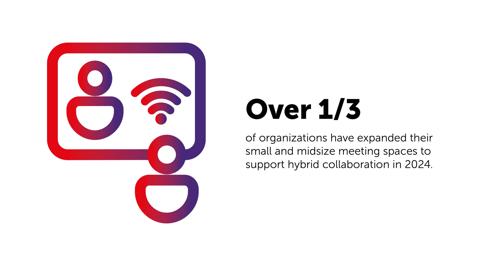
In fact, recent industry research shows that over one-third of organizations expanded their small and midsize meeting spaces to support hybrid collaboration in 2024. This shift reflects a clear priority: empowering distributed teams to connect in real time.
However, with more space comes more complexity. More devices. More users. More access points. And more opportunities for security gaps to take hold.
When individual departments adopt tools without IT guidance, configurations may be incomplete, approvals overlooked, or data routed through platforms not built for enterprise-grade security. Over time, these decisions lead to fragmented environments, making it harder for IT to standardize platforms, deliver training, and maintain compliance.
What begins as a productivity shortcut can become a vulnerability pathway.
Redesign risk management by aligning decisions with security from the start
Strong security depends on the internal alignment behind it. Risk tends to grow when teams, tools, and decision-making processes operate in isolation.
Here are ways to reinforce governance while supporting productivity:
Treat IT as a strategic partner from the beginning
Security oversight is most effective when integrated early. Before evaluating a new platform, application or meeting room technology, bring IT into the conversation. Their perspective on compatibility, access controls, and compliance requirements can prevent missteps before they happen.
Align business goals with security-aware requirements
When assessing new tools, ask:
- Does this system handle regulated or sensitive data?
- How will it interact with existing infrastructure?
- Are third-party access and authentication controls clearly defined?
These considerations help ensure the solution enhances efficiency without inviting hidden risk.
Build a culture of everyday, informed security
Policies alone don’t change behavior – understanding does.
Create guidance that maps clearly to how people actually work.
Show how a skipped update or a quick workaround impacts not just the individual task, but the organization as a whole. Reinforce expectations consistently, not just during annual training.
When employees understand the why, they are far more likely to follow the how.
Security alignment starts at the top
Many organizations invest heavily in protecting against external threats, but some of the most impactful vulnerabilities begin inside the business – through disconnected decisions, inconsistent processes, or tools adopted without shared oversight. Reducing this risk requires shared accountability and clear communication between teams. IT, business leaders, and end users all have a role in aligning how technology gets evaluated, deployed, and supported.
When security becomes a collaborative effort rather than an afterthought, the organization becomes more resilient – and risk has far fewer places to take hold.

Oliver Van Camp
Product Director Meeting Experience, Barco
As Product Director, Oliver Van Camp is leading the global innovation, product management and design teams of the Meeting Experience business unit at Barco. As an expert in defining product vision and strategy, his focus is on ensuring product teams deliver valuable products for customers and the business. Oliver is passionate about building a world of work where people truly connect, collaborate and co-create in meaningful experiences through the ClickShare portfolio.
Over the years, Oliver has built up experience in digital workplace technologies, product management, innovation and go-to-market strategies. Before joining Barco, he worked in various product and consultant roles for the likes of Proximus, PSA Group, Ferranti Computer Systems, and 9Altitudes.